|
Events, the Northern Mockingbird, and the AOS! ͏ ͏ ͏ ͏ ͏ ͏ ͏ ͏ ͏ ͏ ͏ ͏ ͏ ͏ ͏ ͏ ͏ ͏ ͏ ͏ ͏ ͏ ͏ ͏ ͏ ͏ ͏ ͏ ͏ ͏ ͏ ͏ ͏ ͏ ͏ ͏ ͏ ͏ ͏ ͏ ͏ ͏ ͏ ͏ ͏ ͏ ͏ ͏ ͏ ͏ ͏ ͏ ͏ ͏ ͏ ͏ ͏ ͏ ͏ ͏ ͏ ͏ ͏ ͏ ͏ ͏ ͏ ͏ ͏ ͏ ͏ ͏ ͏ ͏ ͏ ͏ ͏ ͏ ͏ ͏ ͏ ͏ ͏ ͏ ͏ ͏ ͏ ͏ ͏ ͏ ͏ ͏ ͏ ͏ ͏ ͏ ͏ ͏ ͏ ͏ ͏ ͏ ͏ ͏ ͏ ͏ ͏ ͏ ͏ ͏ ͏ ͏ ͏ ͏ ͏ ͏ ͏ ͏ ͏ ͏ ͏ ͏ ͏ ͏ ͏ ͏ ͏ ͏ ͏ ͏ ͏ ͏ ͏ ͏ ͏ ͏ ͏ ͏ ͏ ͏ ͏ ͏ ͏ ͏ ͏ ͏ ͏ ͏ ͏ ͏ ͏ ͏ ͏ ͏ ͏ ͏ ͏ ͏ ͏ ͏ ͏ ͏ ͏ ͏ ͏ ͏ ͏ ͏ ͏ ͏ ͏ ͏ ͏ ͏ ͏ ͏ ͏ ͏ ͏ ͏ ͏ ͏ ͏ ͏ ͏ ͏ ͏ ͏ ͏ ͏ ͏ ͏ ͏ ͏ ͏ ͏ ͏ ͏ ͏ ͏ ͏ ͏ ͏ ͏ ͏ ͏ ͏ ͏ ͏ ͏ ͏ ͏ ͏ ͏ ͏ ͏ ͏ ͏ ͏ ͏ ͏ ͏ ͏ ͏ ͏ ͏ ͏ ͏ ͏ ͏ ͏ ͏ ͏ ͏ ͏ ͏ ͏ ͏ ͏ ͏ ͏ ͏ ͏ ͏ ͏ ͏ ͏ ͏ ͏ ͏ ͏ ͏ ͏ ͏ ͏
|
Dear Project Phoenix community, We hope data collection is going well, and that your surveys provide an opportunity each week to appreciate birds and nature! Last Friday, we held our first-ever virtual trivia event, which was a blast! I had a great time connecting with everyone and running this friendly competition. If you’d like to test your own knowledge of birds and conservation, or play some bird-themed trivia with friends and family, feel free to check out the questions from our trivia night! Next Friday, we will be hosting a virtual Intro to Backyard Birds workshop. Scroll down to learn more and sign up. I plan to host more events for our community throughout the fall, so if you have any input on what kinds of events you are interested in, please fill out this form. Happy birding! Yuka Wu | Communications Lead, Project Phoenix
|
BIRD OF THE WEEK:Northern Mockingbird
|
|
The Northern Mockingbird is a sassy, medium-sized, gray bird with a long tail and long legs. Northern Mockingbirds have striking white wing patches that are visible when they fly or open their wings in display. Like other members of the family Mimidae, mockingbirds are known for mimicking other bird calls, and those in urban areas mimic many other noises, too, including car alarms! Their songs can confuse birders, as these birds can sound quite similar to those they are mimicking! One way to distinguish if a song or call is coming from a mockingbird or the species it is mimicking is to pay attention to how often that sound is repeated. Mockingbirds tend to repeat the same sounds two to three times quickly in succession before switching to a different sound. They are known to sing throughout the day and well into the night (to the dismay of many people trying to sleep!) from February through August. Oftentimes, these nighttime singers are males that have not yet found a mate. Male Northern Mockingbirds can learn around 200 different songs in their lifetime!
|
Project Phoenix Scientists Participate in Symposium at the Annual Meeting of the American Ornithological Society
|
|
Dr. Allison Shultz | Advisor & Researcher, Project Phoenix
|
|
Hello Project Phoenix community scientists! I just returned from the annual meeting of the American Ornithological Society, which was held in St. Louis, Missouri. Conferences like this one are always inspiring as they are a chance to see friends and colleagues from around the country (or even the globe), meet students and the next generation of scientists, and hear about the latest scientific findings. This year was no exception, and I think especially in this time of hardship for many, the chance to all come together and celebrate our love of birds and the science surrounding them was especially uplifting. For me, one bright spot in particular was the symposium focused on the impacts of wildfire smoke on birds, which was co-organized by Dr. Olivia Sanderfoot, our program director. This symposium brought together scientists who study this topic from different angles, from using eBird observations that happened to be collected during smoke events, to leveraging long-term data collected by bird banders, to collecting specimens and biological samples during a major avian die-off in New Mexico a few years ago.
|
|
|
Researchers from across the country participated in Up in Smoke: Impacts of Wildfire Smoke on Birds Across the Life Cycle, a symposium at the annual meeting of the American Ornithological Society. From left: Allison Johnson (University of Nebraska-Lincoln), Josée Rousseau (Point Blue Conservation Science), Allison Shultz (Natural History Museum of Los Angeles County), Morgan Tingley (University of California, Los Angeles), Festus Adegbola (University at Buffalo), Olivia Sanderfoot (Cornell Lab of Ornithology), Claire Ramos (Colorado State University – Pueblo), Megan Miller (CSU – Pueblo). |
|
|
I presented on how we can use museum specimens that have been collected over the last 130 years to learn about historical levels of air pollution. Bird feathers are not only important for bird biology (they allow birds to fly, protect birds from adverse weather, and are used for communication!), but are filters, and can serve as records of what was in the air even before measurements of air quality were taken. By collaborating with other scientists at NHMLAC, we are developing methods to actually understand how much black carbon, or soot, is on feathers and where it came from - automobile exhaust, coal burning, diesel exhaust, or wildfire smoke. At this point we are just about ready to start applying these methods to feathers that were collected by our amazing bird banding colleagues on the eastern seaboard in spring of 2023, when boreal fires in Canada inundated much of the northern U.S. in toxic smoke, and earlier this year following the L.A. fires. We will learn so much about whether or not birds can clean their feathers, if some species are more susceptible to air pollution than others, or if each individual's choices change their behavior and vulnerability. Once we know more, we can use feathers from our historical specimens in the collection to start building a timeline and map of historical air pollution. This exciting research will only open more doors and complement the data you are all collecting through Project Phoenix! This conference reminded me that even though the news is often overwhelming, there are still quite a few success stories and people out there working to make the world a better place. Every time one of you does your weekly survey, you are contributing and helping create a dataset we can use to better understand how we can protect the birds in our neighborhoods and beyond. Thank you for your continued participation in Project Phoenix!
|
|
|
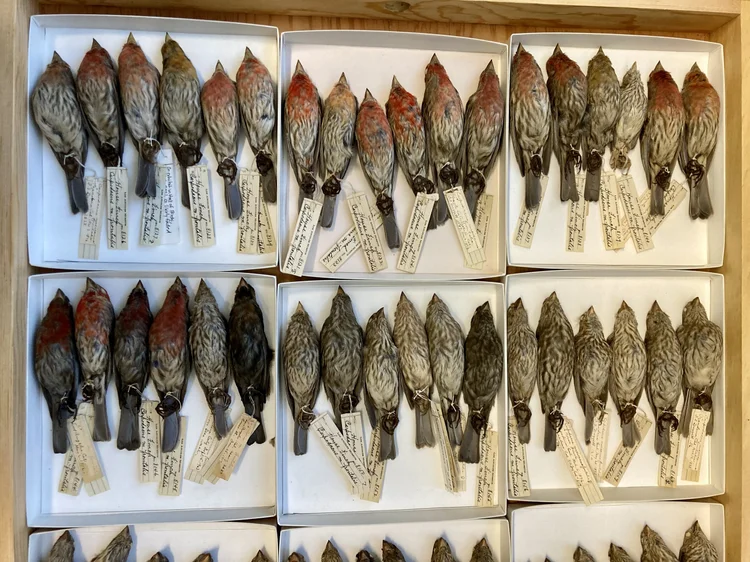
The collections at the Natural History Museum of Los Angeles County include tens of thousands of historical bird specimens. Check out this drawer of House Finch specimens – some of these birds date back to the late 1800s! As birds fly through polluted air, their feathers pick up black carbon. These dirty feathers make birds appear much darker in color, like those in the bottom left box shown above. |
|
Intro to Backyard Birds Workshop
|
|
New to birding? Having trouble identifying birds during your surveys? Looking for a refresher on the common birds in your backyard? Join us next week, on Friday, August 29th at 6 p.m. to learn all about our neighborhood birds. We’ll share our favorite tips for birding and get you up to speed on identifying all the cool species you might be seeing around your home. Sign up here.
|
Bird-Safe Windows, with Birds Connect Seattle
|
|
Want to protect birds from window strikes, but unsure where to begin? Or maybe your windows are a little hard to reach and you could use some assistance? Birds Connect Seattle is piloting a new program connecting bird-conscious homeowners with volunteers who can help install collision deterrents on windows. Just fill out the organization’s brief assistance form, and someone will be in touch with you soon!
|
|
We love to hear from our volunteers! What motivated you to join Project Phoenix? Click here to share your story as a volunteer spotlight.
|
Follow us on Instagram @projectphoenix_socal and join our new Slack for more content on birds and Project Phoenix!
|
|
|
|