|
Learn more about Red-tailed Hawks, Swinhoe’s White-eyes, and the lights out pledge! ͏ ͏ ͏ ͏ ͏ ͏ ͏ ͏ ͏ ͏ ͏ ͏ ͏ ͏ ͏ ͏ ͏ ͏ ͏ ͏ ͏ ͏ ͏ ͏ ͏ ͏ ͏ ͏ ͏ ͏ ͏ ͏ ͏ ͏ ͏ ͏ ͏ ͏ ͏ ͏ ͏ ͏ ͏ ͏ ͏ ͏ ͏ ͏ ͏ ͏ ͏ ͏ ͏ ͏ ͏ ͏ ͏ ͏ ͏ ͏ ͏ ͏ ͏ ͏ ͏ ͏ ͏ ͏ ͏ ͏ ͏ ͏ ͏ ͏ ͏ ͏ ͏ ͏ ͏ ͏ ͏ ͏ ͏ ͏ ͏ ͏ ͏ ͏ ͏ ͏ ͏ ͏ ͏ ͏ ͏ ͏ ͏ ͏ ͏ ͏ ͏ ͏ ͏ ͏ ͏ ͏ ͏ ͏ ͏ ͏ ͏ ͏ ͏ ͏ ͏ ͏ ͏ ͏ ͏ ͏ ͏ ͏ ͏ ͏ ͏ ͏ ͏ ͏ ͏ ͏ ͏ ͏ ͏ ͏ ͏ ͏ ͏ ͏ ͏ ͏ ͏ ͏ ͏ ͏ ͏ ͏ ͏ ͏ ͏ ͏ ͏ ͏ ͏ ͏ ͏ ͏ ͏ ͏ ͏ ͏ ͏ ͏ ͏ ͏ ͏ ͏ ͏ ͏ ͏ ͏ ͏ ͏ ͏ ͏ ͏ ͏ ͏ ͏ ͏ ͏ ͏ ͏ ͏ ͏ ͏ ͏ ͏ ͏ ͏ ͏ ͏ ͏ ͏ ͏ ͏ ͏ ͏ ͏ ͏ ͏ ͏ ͏ ͏ ͏ ͏ ͏ ͏ ͏ ͏ ͏ ͏ ͏ ͏ ͏ ͏ ͏ ͏ ͏ ͏ ͏ ͏ ͏ ͏ ͏ ͏ ͏ ͏ ͏ ͏ ͏ ͏ ͏ ͏ ͏ ͏ ͏ ͏ ͏ ͏ ͏ ͏ ͏ ͏ ͏ ͏ ͏ ͏ ͏ ͏ ͏ ͏ ͏ ͏ ͏ ͏
|
Dear Project Phoenix community, We are almost two months into data collection! August truly flew by. We sign up volunteers on a rolling basis, and we continued to onboard dozens of new volunteers this month. If you are new to Project Phoenix, welcome! We are so happy to have you on board. If you have have been with us all summer, thank you so much for your dedication to monitoring and protecting birds! As the summer heats up, we want to encourage all of our volunteers to take precautions to protect your health and safety. Consider conducting your weekly surveys in the morning or evening when temperatures are cooler, or staying indoors and monitoring birds through a window to avoid excessive heat. If you’d like to monitor birds at a new indoor location, simply register your new site using the same registration form you used to tell us about your original monitoring site. Please remember that you can also email us to request free N95 masks. Happy birding, all! Yuka Wu | Communications Lead, Project Phoenix
|
BIRD OF THE WEEK:Red-tailed Hawk
|
|
Wait, that bird doesn't have a red tail! Did you know that the Red-tailed Hawk is often misidentified, despite being one of the most common raptors in North America? This is because many beginner birders look for their namesake: the red tail. Unfortunately, identifying Red-tailed Hawks isn’t as simple as seeing a bright, rusty tail on a raptor, since juveniles and some morphs (individuals with different variations in plumage) lack it. But, don’t worry, there are several other more consistent ways of identifying Red-tailed Hawks. First, take note of their overall size and shape. Red-tailed Hawks are large and bulky, with wide wings and a short, wide tail compared to some other raptors. They are typically brown above with a paler underside. When soaring high above, look out for dark patagial bars. This barring is on the shoulders, along the leading edges of the wings right next to the head. Most Red-tailed Hawks also have a “belly band,” or a darker strip of feathers across their belly under a paler breast. Finally, you can identify these birds by their calls! They let out a loud, characteristic screech that many people mistake as the cry of America’s national bird, the Bald Eagle, due to the influence of the many Hollywood producers who did not check with their local birders before adding birdsong to the soundtracks of their films! For more tips, here’s a helpful, more detailed guide to identifying Red-tailed Hawks. You’ll find Red-tailed Hawks throughout the American West and across the continent. These raptors are often found soaring or sitting high up on telephone poles along highways. You might also notice other smaller birds like crows and mockingbirds repeatedly swooping at a Red-tailed Hawk.This is a behavior called “mobbing,” which these smaller birds do to drive away potential predators in order to defend their territory and protect nests.
|
Intro to Backyard Birds Workshop
|
|
New to birding? Having trouble identifying birds during your surveys? Looking for a refresher on the common birds in your neighborhood? Join us tomorrow, August 29th at 6 p.m. to learn all about our neighborhood birds. This will be a virtual workshop on Zoom and is completely free. We’ll share our favorite tips for birding and get you up to speed on identifying all the cool species you might be seeing around your home. Sign up here.
|
Let’s go birding together!
|
|
Do YOU want to lead or participate in in-person birding events and connect with fellow volunteers in your area? Fill out this short form to share your name and city, and we can help you organize a Project Phoenix birding event near you!
|
|
Yuka Wu | Communications Lead, Project Phoenix
|
|
Two birds with one newsletter?! Lucky us! Some of you might have noticed this tiny, non-native songbird hailing from Southeast Asia. One of our volunteers reached out about seeing an increasing number of Swinhoe’s White-eyes in their yard during surveys, and this reflects the rapidly growing populations of this species in several areas along the West Coast, such as Orange County, California. Dr. Allison Shultz, a member of our team and the Associate Curator of Ornithology at NHMLAC, recently published a study investigating the expansion of Swinhoe’s White-eyes. Her team believes it likely that they were first introduced to California through the illegal pet trade, then able to expand rapidly due to both their fast reproduction and an abundance of urban landscape features such as hummingbird feeders, non-native plants, and watered lawns. They predict that Swinhoe’s White-eye populations will continue to expand, but it is uncertain how they will impact native species in the future. Check out this article from Audubon Magazine to learn more!
|
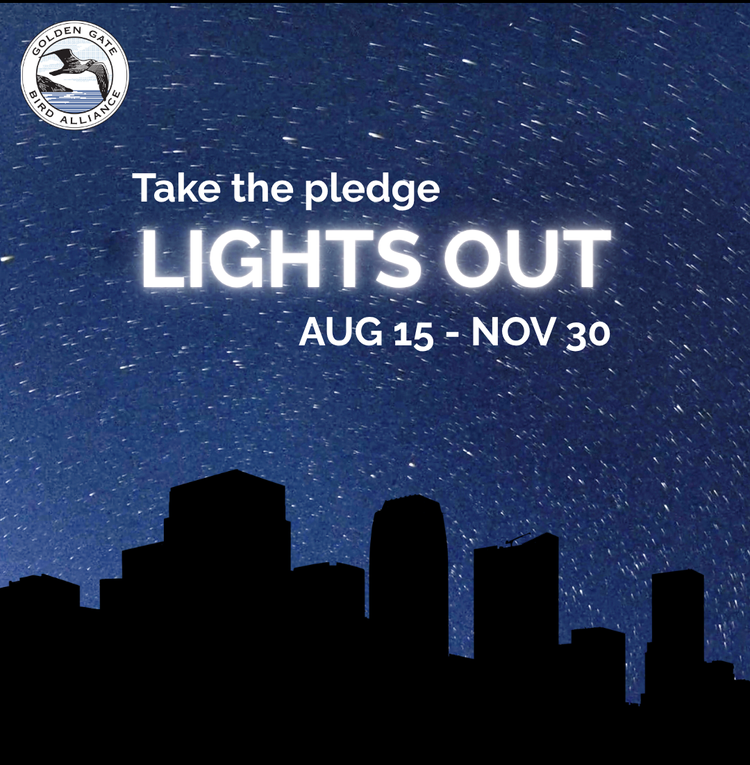
Take the LIGHTS OUT pledge with Golden Gate Bird Alliance!
|
|
Each year, billions of birds migrate over North America, journeying from their wintering grounds in the south to their breeding grounds in the north, and back again. It is a remarkable journey. Most birds migrate at night, navigating by the stars. Unfortunately, artificial lights from our cities and towns cause birds to collide with buildings, veer off course, and tire out, making them vulnerable to predators, starvation, and exhaustion. But, this is a problem we can solve! Turn off, dim, or redirect your lights at night during bird migration periods in the spring (February through May) and the fall (August through October). Ask your local buildings, businesses, and workplaces to do the same. Take Golden Gate Bird Alliance’s Lights Out Pledge today and help America’s birds get home safe. For more information on #LightsOutforBirds, please visit: https://goldengatebirdalliance.org/lightsoutforbirds Take the pledge here: goldengatebirdalliance.org/golightsout
|
|
We love to hear from our volunteers! What motivated you to join Project Phoenix? Click here to share your story as a volunteer spotlight.
|
Follow us on Instagram @projectphoenix_socal and join our new Slack for more content on birds and Project Phoenix!
|
|
|
|